. . .
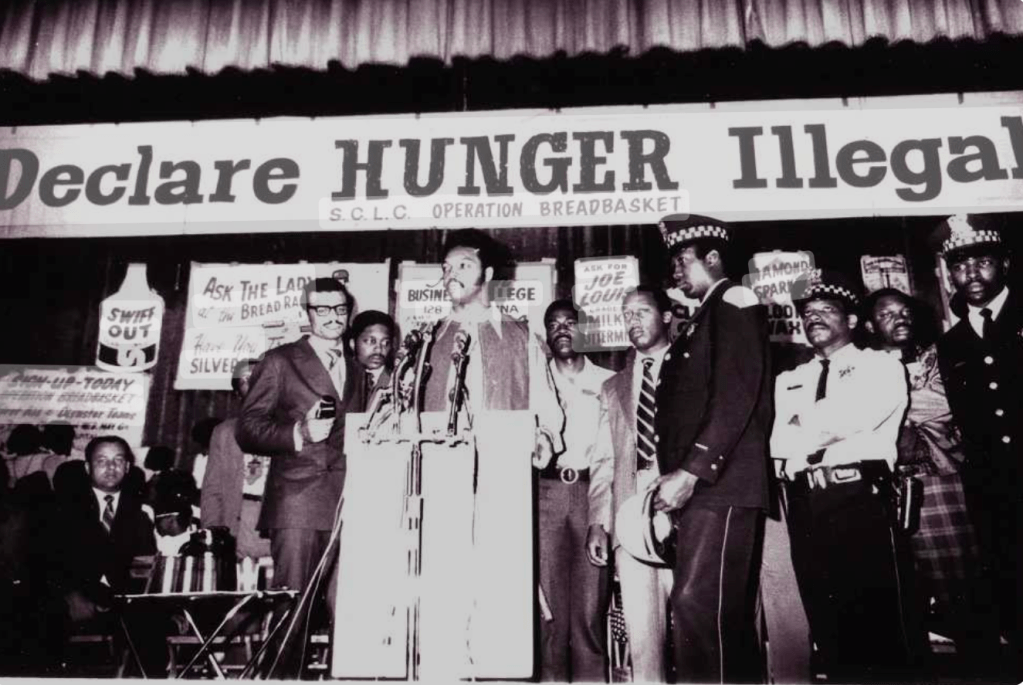
Photo Credit: Emory University Library
. . .
This past year I was tapped to assist in the digitization, preservation and access of the Rev. Jesse Jackson Oral History Archives and Project.
This project has been presented in partnership with the Chicago History Museum (CHM) and the Chicago Theological Seminary (CTS). It has been made possible, in part by a grant from The Donnelley Foundation. The grant proposal encompassed the collection of, preservation and establishment of access to these interviews.
As part of the Jackson Oral History Project, CTS developed Season 3 of its podcast “OUR 7 NEIGHBORS” utilizing pieces of these interviews paired with contemporary leaders in activism and industry.
. . .
Season 3: Ep.2 “Decolonizing Your Imagination”- of the podcast “OUR 7 NEIGHBORS”
. . .
Interviewed by Rev. Brian E. Smith and Kim Schultz (Director of Advancement & Strategic Partnerships and Coordinator of Creative Initiatives at the Interreligious Institute, respectfully), the subjects include early activists who were a part of Operation Breadbasket (later known as Operation PUSH) and worked alongside Jackson. There are six primary oral history interviewees, paired with contemporary leaders. This is a cumulation of years of work by Smith, Schultz and many others. The intention is to provide a bridge between the past and the present and to recognize Jackson’s specific legacy in Chicago. His work as a community organizer and with Dr. King’s Southern Christian Leadership Conference (SCLC), has it’s roots at the Chicago Theological Seminary.
Hermene Hartman coordinated the Operation Breadbasket’s Black Expo. She is in conversation with Brandis Friedman, co-anchor and correspondent for “Chicago Tonight” on WTTW.
Martin Deppe represents a historical voice of the Breadbasket movement; he is coupled with Jim Seidler as the contemporary voice. Seidler is an executive who works with minority vendors at Jewel Foods. Deppe negotiated the first covenant with the supermarket chain.
Rev. David Wallace is another historical voice and former Chicago branch secretary for Operation Breadbasket. He is paired with Otis Moss III who provides a connective and current voice.
Rev. Jeanette Wilson is a strong female voice to this movement, she was a staffer at Operation PUSH and current Executive Director of PUSH-Excel. Her testimony is in conversation with Bishop Vashi McKenzie, the first female African Methodist Episcopal Bishop.
Mrs. Betty Massoni, wife, of late Chicago activist Gary Massoni contextualizes what it was like to be amongst fellow seminary students tapped by MLK to lead Operation Breadbasket. Her conversation is balanced with, Mrs. Jackie Jackson, wife to Rev. Jesse Jackson.
Finally, Rev. Jesse Jackson himself was interviewed with reflections on his youth, activism, and beginnings in Chicago and CTS. He is paired with Dr. Freddie Haynes, who succeeded Rev. Jackson, as President, at Rainbow PUSH.
. . .
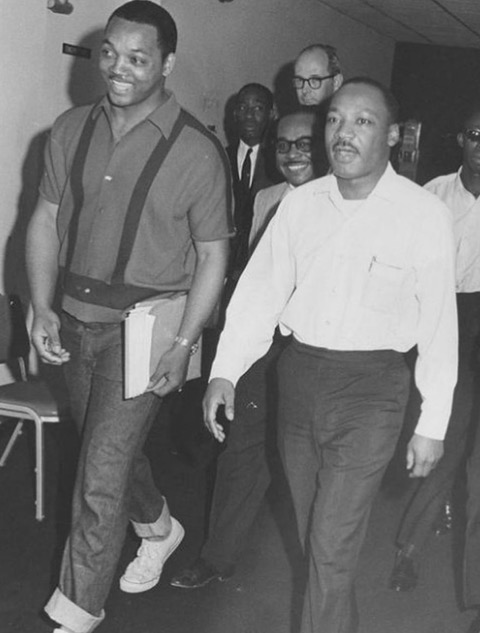
Photo Credit: N’digo.
. . .
Why This Archive Matters
We live in an age where people are dehistorized from the truth, particularly regarding Black history. Our history is being distorted and aborted. This attempts to bring together the voices of the people who made this history in real time. We have an amazing opportunity to learn from those who made a significant impact and brought forth change. We also want to utilize the information to train future leaders. We want praxis.
Rev. Brian E. Smith
What I Am Learning Individually
I look to Jackson and the academy of scholars who emerged that Spring of 69′ from the Chicago Theological Seminary (CTS) as young students, who led, engaged in an extraordinary internal debate. This debate steamed from: myth versus reality, humility versus power, the ideal versus the pragmatic, preaching versus practicing. These questions they asked back then echo down through the years and are an essential struggle that archivists find themselves in now. The Archivist’s career is one of service and practice, but not neutrality.As Otis Moss III voiced in Season 3: Ep.2 “Decolonizing Your Imagination”, of the podcast “OUR 7 NEIGHBORS”, “Sometimes you gotta get caught in the act”.
Our images and stories we create, matter. They form belonging, representation, historical memory and context. Archivists, storytellers, artists, memory workers, play a pivotal role in this creation. Archivists exist in order to make other people’s work possible. As an archivist, I feel a function of my position is honoring, correcting our historiographic forbears, examining the boundaries of my inescapable personal worldview, to handle records with: fairness, humility, scholarly engagement and equity.
I agree with Moss on the importance of listening in repairing any relationship and interrupting oppression. When archivists enter or are invited into communities, our role is to listen and be aware of knowledge protocols, definitions and information needs of the diverse communities we serve. Then, an archivist must face their personal bias and.the harmful fallacy of neutrality. Slow, cross disciplinary, anti-oppressive exploration and critical awareness of unnamed norms, elevates and blesses everyone. By doing backward glances, such as preserving oral histories, we can better see ourselves today, and prepare those doing the ongoing work regarding: police brutality, discriminatory sentencing, housing, education and employment inequality.
 EMILY ECKSTRAND
Leave a comment